The fields of "visual culture" and "media studies" have emerged over the last decades to embrace a wide-range of interdisciplinary approaches to studying the cultural significance of media and the ways in which technologies of seeing are imbricated by various social and political concerns. On the one hand, visual culture is a new -- and still hotly contested -- discipline, traversing art history, film, photography, popular culture, literary theory, cultural anthropology, among other fields. On the other hand, many of the theoretical and historical roots of visual culture and media studies can be traced back to the first third of the twentieth-century, arguably reaching a high-point during the 1920s in Weimar Germany. It is here that many of the most significant and far-reaching elaborations of the impact of new media on mass culture -- ranging from film, radio, photography, the photomontage, and the gramophone to advertising, theater, and cabaret -- were first articulated by the likes of Siegfried Kracauer, Walter Benjamin, Alfred Döblin, Bertolt Brecht, Raoul Hausmann, Hannah Höch, Kurt Tucholsky, Ernst Jünger, and others. The purpose of this graduate seminar is to explore the origins of media theory by looking at and analyzing the visual culture of Weimar. We will start by attempting to understand the history of the concept "media theory" by reading selections from contemporary critics (such as Friedrich Kittler, Marshall McLuhan, Hans Ulrich Gumbrecht, and Jonathan Crary) as well as several important precursors (ranging from Leon Battista Alberti and Rene Descartes to Sigmund Freud and Robert Musil). From there, we will turn to the visual culture of Weimar, focusing on a number of cultural developments and theoretical paradigms in media theory.
The study of Weimar visual culture and media theory is, by definition, interdisciplinary in nature, and I hope the course attracts participants from disciplines as diverse as literature, art history, musicology, film, architecture, and history. I intend the course to be a "research seminar" -- that is to say, participants will be responsible for presenting both the work assigned as well as their own, original work-in-progress. All participants will be asked to give two presentations throughout the quarter: One presentation will be on the material of the week (this can be done individually or in small groups) lasting about 20-25 minutes; the second presentation (20 minutes) will be on your work-in-progress and should correspond to your final project for the class. It will be delivered in week nine in the form of a conference paper. There are also two written requirements: The first is a sample syllabus of a course that you would like to teach (at either the graduate level or the advanced undergraduate level) on some aspect of visual culture/media studies, ideally relating to, or at least including, the Weimar period. Having thought about and actually designed such a course will be especially important for you when you get ready to go on the job market. The second written requirement is a 20-page (expanded) version of your conference presentation. This will be due at the end of the quarter.
The 20-25 minute presentation on the week's assignment should introduce the material under discussion in a succinct format (about 5-10 minutes) and highlight what you consider to be several important ideas/themes/issues/questions that you would like to see discussed by the seminar participants. Where possible, the presentations should be illustrated with appropriate media (slides, film clips, etc). Please produce a handout for the class (xerox enough copies ahead of time), which outlines the main points of your presentation and includes a relevant bibliography. The presentation should not be written-out in advance but rather spoken from notes. The second presentations will all take place on the same day (week nine) in the format of a conference. These papers will be organized into one-hour panels by topic and presenters will have 20 minutes to read the papers out loud. After each panel, participants and invited guests will have the opportunity to pose questions and critiques. The class for this day will run longer than three hours, but include dinner and drinks for everyone!
Anton Kaes, Martin Jay, and Edward Dimendberg, eds., The Weimar Republic
Sourcebook Course-reader: includes essays by Alberti, Descartes, Musil, Freud, McLuhan, Gumbrecht, Crary, Benjamin, Döblin, Hausmann, Jünger, Levin, Petro, Huyssen, Hake, and Kaes.
Recommended Books For Background: Peter Gay, Weimar Culture: The Outsider as Insider
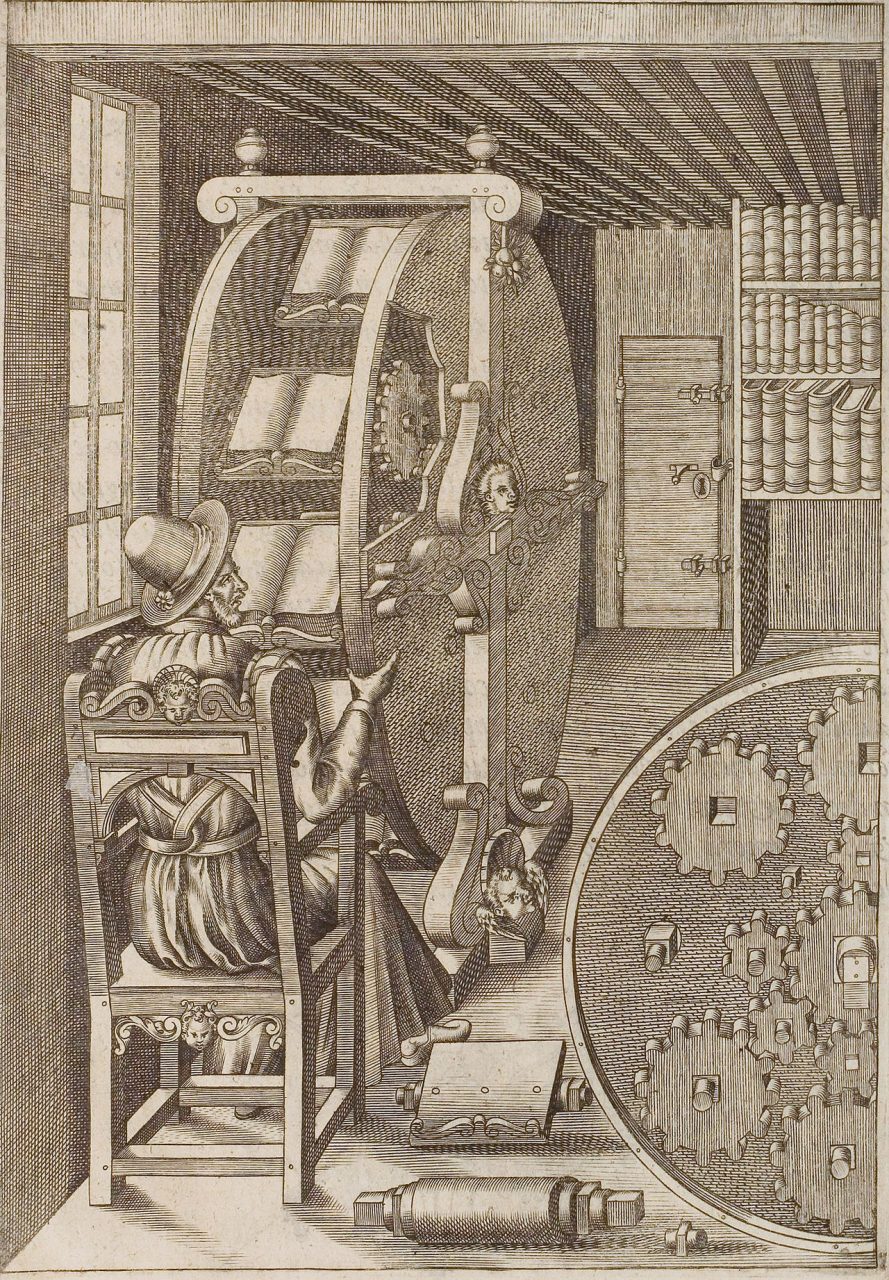
· Mediation and Re-mediation, or the Persistence of the "window
paradigm"
WEEK 2: Technologies of Observation and New Media Revolutions · Primary text: Friedrich Kittler, Gramophone, Film, Typewriter
WEEK 3: Theory of Photography and the Moving Image I · Primary text: Janet Ward, Weimar Surfaces: Urban Visual Culture
in 1920s Germany (introduction and chapter three)
· Primary texts: The Weimar Republic Sourcebook, "New
Mass Media: Radio and Gramophone" (pp. 594-615), "Visual Culture:
Illustrated Press and Photography" (pp. 641-654), "Visions of
Plenty: Mass Consumption, Fashion, and Advertising" (pp. 655-672)
Week 5: Theory of the Montage: A Crisis of Narrativity?
WEEK 6: The (Photo)montage and Ideology Critique · Works of art by Hannah Höch, Raoul Hausmann, John Heartfield
(selection of documents and works of art in course-reader)
WEEK 7: Theory of Photography and the Moving Image II · The Weimar Republic Sourcebook, "Cinema from Expressionism
to Social Realism" (pp. 617-640)
· The Weimar Republic Sourcebook, "Theatre, Politics,
and the Public Sphere" (pp. 530-550), "The Roaring Twenties:
Cabaret and Urban Entertainment" (pp. 551-567)
WEEK 9: "Graduate Student Conference" All participants present papers (20 minutes in length) at a class conference on "Weimar Visual Culture and Media Theory." Exact schedule TBA.
WEEK 10: Conclusions Last day of class; no readings scheduled. |
||||||